


Oorzaken van deeltjesafzettingen op het oppervlak van buitenjacuzzi's
2026-11-10 15:356. IJzer, koper en andere mineralen in de waterbron
Het mineraalgehalte van leidingwater en grondwater kan sterk variëren, afhankelijk van de locatie.
Als het water waarmee een buitenjacuzzi wordt gevuld een hoge concentratie ijzer, koper of andere metaalionen bevat, kunnen deze na oxidatie of veranderingen in de watersamenstelling gekleurde afzettingen vormen.
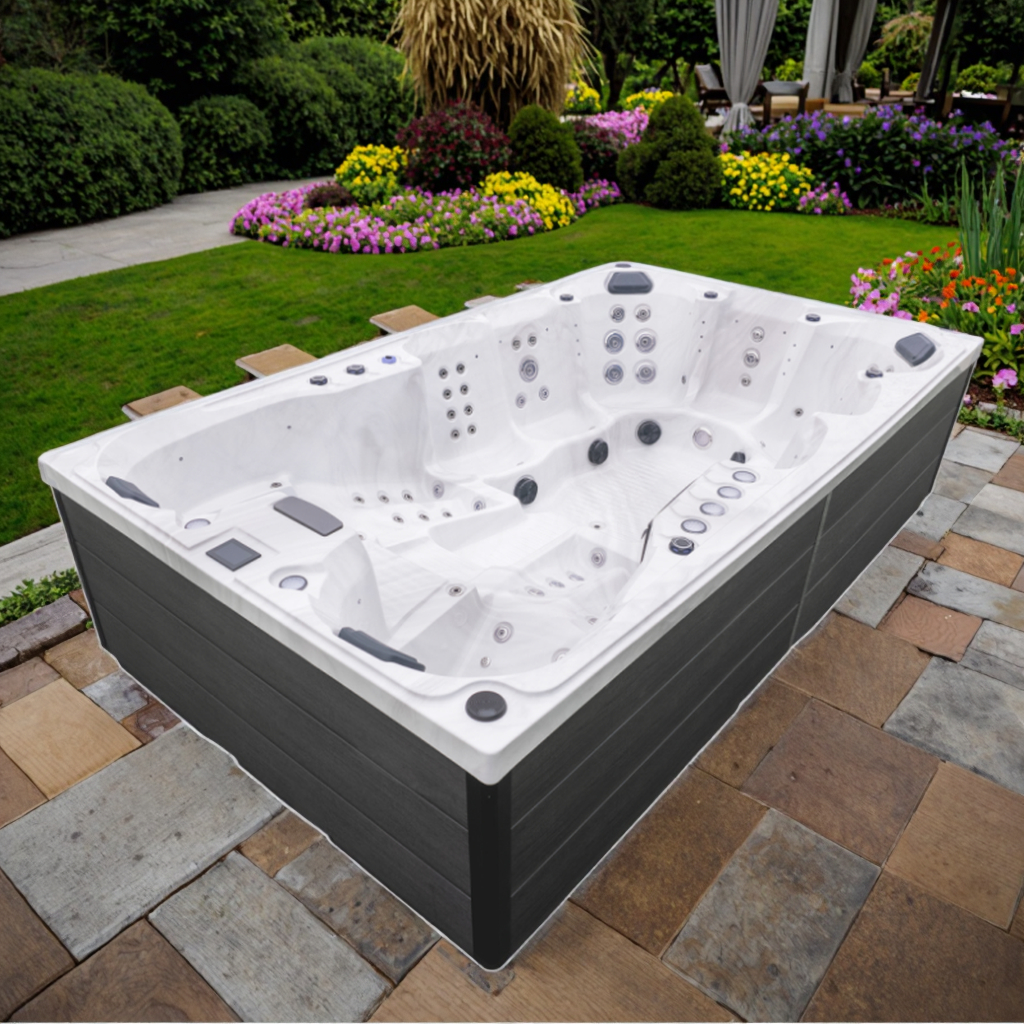
IJzer kan bijvoorbeeld gele, bruine of roodbruine deeltjes vormen, terwijl koper blauwgroene afzettingen kan veroorzaken. Deze stoffen kunnen zich aan de binnenwanden van het bad hechten of zich met andere onzuiverheden combineren tot een film van deeltjes.
Oplossing: Bij het voor het eerst vullen van het bad of bij het vervangen van de waterbron is het raadzaam om het ijzer-, koper- en calciumgehalte en de pH-waarde te controleren. Als de waterbron aanzienlijke hoeveelheden metaalionen bevat, overweeg dan het gebruik van geschikte voorbehandelingsapparatuur of een bewezen product voor metaalafvang en -behandeling.
7. Stof, pollen en plantenresten van buitenBuitenjacuzzi's zijn gevoeliger voor milieuvervuiling dan binnenjacuzzi's.Stof, pollen, bladeren, insecten en ander fijn vuil kunnen gemakkelijk in het water terechtkomen. Zodra deze deeltjes zich vermengen met menselijke lichaamsoliën en mineralen, kunnen ze drijvende laagjes vormen of zich hechten aan de binnenwanden van de spa. Oplossing: Houd de thermische afdekking op zijn plaats wanneer u de spa gebruikt.
bubbelbad
| Als de jacuzzi niet in gebruik is, dient u de omgeving eromheen regelmatig schoon te maken en de thermische afdekking te controleren op beschadigingen of een slechte afdichting. | Welke invloed kan een korrelige film hebben op een buitenjacuzzi? | Een korrelige laag doet niet alleen afbreuk aan het uiterlijk van de spa, maar kan ook de werking van de apparatuur belemmeren en de waterkwaliteit en veiligheid in gevaar brengen. |
| 1. Impact op de waterkwaliteit en de gebruikerservaring: De continue ophoping van oliën, mineralen en zwevende deeltjes kan ervoor zorgen dat het water troebel wordt. In commerciële omgevingen – zoals hotels of resorts – heeft de uitstraling van het water direct invloed op hoe gasten de hygiënenormen van de accommodatie beoordelen. | 2. Verhoogde belasting van het filtersysteem: Wanneer deeltjes in het filtersysteem terechtkomen, hechten ze zich aan het oppervlak van de filtercartridge. Als deze niet wordt gereinigd, kan dit leiden tot verstoppingen, een verminderde watercirculatie en zelfs een negatieve invloed op de werking van de massagejets. | 3. Verminderde verwarmingsefficiëntie: Als de film voornamelijk uit kalkaanslag bestaat, kunnen zich afzettingen ophopen in de boiler en het leidingwerk, waardoor de warmteoverdracht wordt belemmerd. Langdurige ophoping kan ook leiden tot hogere onderhoudskosten. |
| 4. Verhoogd risico op microbiële besmetting: Als de korrelige film biofilm of organische afzettingen bevat, is extra voorzichtigheid geboden. De CDC merkt op dat biofilms, sedimenten, watertemperatuur en de hoeveelheid resterend desinfectiemiddel allemaal cruciale factoren zijn bij het bestrijden van Legionella-bacteriën in spabaden. Als u daarom een duidelijke slijmerige film of terugkerend vlokkig (schilferig) vuil opmerkt, dient u het gebruik van het spabad te staken en een grondige inspectie uit te voeren. | Het aanpakken van een korrelige film in een buitenjacuzzi | Zodra de oorzaak van het probleem is vastgesteld, kunt u de volgende stappen ondernemen om het op te lossen: |
| Stap 1: Stop het gebruik en verwijder zichtbare verontreinigingen. | Als er een duidelijk zichtbare korrelige laag ontstaat – vooral als dit gepaard gaat met een onaangename geur, troebel water of slijmerige afzettingen – stop dan onmiddellijk met het gebruik van de whirlpool. | Voor olieachtige afzettingen op het wateroppervlak kunt u speciale olieabsorberende producten of een fijnmazige skimmer gebruiken. Voor aanslag op de binnenwanden kunt u zachte reinigingsmiddelen gebruiken in combinatie met een reiniger die speciaal is ontwikkeld voor acryloppervlakken. |
| Vermijd het gebruik van staalwol, schurende schuursponsjes of zeer bijtende reinigingsmiddelen, aangezien deze het oppervlak van de whirlpool kunnen beschadigen. | Stap 2: Reinig het filter. | Verwijder de filtercartridge en controleer deze op de aanwezigheid van oliën, mineralen en andere deeltjes. Spoel de cartridge eerst af met schoon water en reinig hem vervolgens grondig met een speciaal reinigingsmiddel dat geschikt is voor uw specifieke filtercartridgetype. |
| Als de filtercartridge beschadigd, vervormd of ernstig verstopt is, vervang deze dan onmiddellijk. Zodra het filtersysteem correct functioneert, zal het veel effectiever zijn in het verwijderen van zwevende deeltjes uit het water. | Stap 3: De waterbalans aanpassen | Test de pH-waarde, de concentratie ontsmettingsmiddel, de totale alkaliteit en de calciumhardheid opnieuw. |
Als de pH-waarde te hoog is, gebruik dan een pH-regelaar die geschikt is voor spabaden en pas deze in kleine stapjes aan. Als de calciumhardheid te hoog is, overweeg dan om het bad gedeeltelijk leeg te laten lopen en opnieuw te vullen, of om behandeld water te gebruiken.
Als de concentratie van het ontsmettingsmiddel te laag is, voeg dan meer toe volgens de gebruiksaanwijzing – overschrijd de aanbevolen dosering niet.
Stap 4: Reinig de circulatieleidingen en sproeiers.
Als er steeds opnieuw een laagje deeltjes verschijnt, wordt een grondige reiniging van het circulatiesysteem aanbevolen.
Gebruik een speciaal reinigingsmiddel voor leidingen volgens de instructies van de fabrikant. Laat het reinigingsmiddel door het systeem circuleren voordat u het aftapt en doorspoelt. Besteed speciale aandacht aan de sproeiers, leidingaansluitingen en de binnenkant van het filtersysteem.
Stap 5: Afvoeren en bijvullen (indien nodig)
Als het water erg troebel is, veel bezinksel bevat of ondanks bovenstaande stappen niet weer helder wordt, overweeg dan om het bad volledig leeg te laten lopen.
Na het aftappen van het water, reinigt u de binnenoppervlakken, sproeiers en het filter en vult u het bad opnieuw met behandeld water. Controleer voordat u het apparaat weer in gebruik neemt of het circulatiesysteem correct werkt en voer een volledige waterkwaliteitstest en ontsmettingsbehandeling uit.
Veelgestelde vragen (FAQ)
Veelgestelde vraag 1: Waardoor verschijnen er witte deeltjes op het oppervlak van een buitenjacuzzi?
Normaal gesproken moet u eerst controleren op kalkaanslag, mineraalafzettingen of resten van reinigingsmiddelen. Als de deeltjes hard zijn en aan de binnenoppervlakken kleven, controleer dan de calciumhardheid en de pH-waarde; als ze eruitzien als los, vlokkerig (pluizig) vuil, inspecteer dan het filtersysteem.
Veelgestelde vraag 2: Waarom verschijnt er direct na het verversen van het water een laagje deeltjes in een buitenjacuzzi?
Dit kan te wijten zijn aan een hoge hardheid van het nieuwe water, of het kan zijn dat verontreinigingen die in de leidingen waren achtergebleven, zijn weggespoeld toen het bad opnieuw werd gevuld. Het is raadzaam om de kwaliteit van het gebruikte water te controleren en, indien nodig, de circulatieleidingen grondig te reinigen.
Veelgestelde vraag 3: Kan een antischuimmiddel de deeltjeslaag in een buitenjacuzzi verwijderen?
Niet per se. Antischuimmiddelen zijn voornamelijk ontworpen om schuimvorming te verminderen; ze zijn niet effectief tegen alle soorten oliën, mineralen of biofilms. U moet eerst de bron van de verontreiniging vaststellen voordat u het juiste behandelingsproduct kiest.
Veelgestelde vraag 4: Kan een laagje deeltjes de jets van een buitenjacuzzi verstoppen?
Ja, dat is mogelijk. Na verloop van tijd kunnen fijne deeltjes en sediment zich ophopen in de circulatieleidingen en sproeiers, waardoor de waterstroom afneemt. Als u daarom merkt dat er herhaaldelijk een laagje deeltjes in het filtersysteem zit, moet u uw filterinstallatie en leidingen zo snel mogelijk laten controleren.
Veelgestelde vraag 5: Hoe vaak moet een buitenjacuzzi grondig worden schoongemaakt?
Er is geen vast schema dat voor elk apparaat geldt. Voor particuliere gebruikers moet de frequentie van grondige reiniging worden afgestemd op het gebruiksniveau en de aanbevelingen van de fabrikant. Voor jacuzzi's in hotels of commerciële spa's moet een onderhoudsplan worden opgesteld op basis van de gebruiksintensiteit en de lokale gezondheids- en veiligheidsvoorschriften.
The filtration system is responsible for removing dust, hair, oils, and other suspended particles from the hot tub water. If the filter is not cleaned regularly, a significant amount of debris will accumulate on the surface of the filter cartridge.
When a filter cartridge becomes clogged, water flow resistance increases and circulation efficiency drops; consequently, some particles are not filtered out in time and end up re-entering the hot tub water.
This explains why some users find that even after repeatedly scrubbing the interior walls of the spa hot tub, a particulate film continues to reappear.
Solution: Inspect the filter regularly and clean the cartridge based on the frequency of use. Residential users should check the filter weekly and rinse it as needed, depending on the level of contamination. If a filter cartridge cannot be cleaned properly, or if it is damaged or worn out, it should be replaced promptly. For commercial outdoor hot tubs, a more rigorous filter maintenance schedule should be established based on the intensity of use.
5. Formation of Biofilm Within the Plumbing
Biofilm is an issue in outdoor whirlpool spa hot tubs that is frequently overlooked. Over time, microorganisms can attach themselves to circulation pipes, jets, and other damp surfaces, combining with organic contaminants to form sticky, viscous structures. Even if the interior walls of a hot tub appear clean, contaminants may still be accumulating within the internal plumbing.
When the water pump and massage jets are activated, portions of this biofilm may detach and re-enter the tub, appearing as grayish-white flocculent matter, transparent sticky particles, or floating films.
If these particulate films consistently reappear after the spa hot tub has been cleaned, the internal plumbing should be thoroughly inspected.
Solution: Use a specialized pipe-cleaning product designed for outdoor spa hot tubs, following the manufacturer’s instructions for cleaning, draining, and flushing the system. For units that have not undergone a deep clean for an extended period, pay particular attention to the circulation pipes, jets, and filtration system. Note that standard disinfectants may not be effective at removing mature, established biofilms.
6. Iron, Copper, and Other Minerals in the Water Source
Mineral content in tap water and groundwater can vary significantly depending on the location.
If the water used to fill an outdoor spa hot tub contains high concentrations of iron, copper, or other metal ions, these may form colored deposits following oxidation or changes in water chemistry.
For instance, iron can create yellow, brown, or reddish-brown particles, while copper may result in blue-green deposits. These substances can adhere to the tub’s interior walls or combine with other impurities to form particulate films.
Solution: When filling the tub for the first time or changing the water source, it is advisable to test for iron, copper, calcium hardness, and pH levels. If the water source contains significant levels of metal ions, consider using appropriate pre-treatment equipment or a proven metal-sequestering/treatment product.
7. Outdoor Dust, Pollen, and Plant Debris
Outdoor whirlpool spa hot tubs are more susceptible to environmental contamination than indoor units.
Dust, pollen, leaves, insects, and other fine debris can easily enter the water. Once these particles combine with human body oils and minerals, they may form floating films or adhere to the interior surfaces of the spa hot tub. Solution: Keep the thermal cover in place whenever the whirlpool spa hot tub is not in use, regularly clean the area surrounding the whirlpool spa hot tub, and inspect the thermal cover for any damage or poor sealing.
What impact can a granular film have on an outdoor hot tub?
A granular film not only detracts from the spa hot tub’s appearance but can also interfere with equipment operation and compromise water quality and safety.
1. Impact on water quality and user experience: The continuous accumulation of oils, minerals, and suspended particles can cause the water to become cloudy. In commercial settings—such as hotels or resorts—the appearance of the water directly influences how guests perceive the facility's hygiene standards.
2. Increased strain on the filtration system: As particulate matter enters the filtration system, it adheres to the surface of the filter cartridge. If left uncleaned, this can lead to clogs, reduce water circulation, and even impair the performance of the massage jets.
3. Reduced heating efficiency: If the film consists primarily of calcium scale, deposits may accumulate inside the heater and plumbing, hindering heat transfer. Long-term buildup can also lead to higher equipment maintenance costs.
4. Increased risk of microbial contamination: If the granular film contains biofilm or organic deposits, extra caution is required. The CDC notes that biofilms, sediments, water temperature, and residual disinfectant levels are all critical factors in controlling *Legionella* bacteria in spa hot tubs. Therefore, if you notice a distinct slimy film or recurring flocculent (flaky) debris, you should suspend use of the hot tub and conduct a thorough inspection.
Addressing a Granular Film in an Outdoor Hot Tub
Once the source of the problem has been identified, you can take the following steps to resolve it:
Step 1: Suspend use and remove visible contaminants
If a noticeable granular film appears—especially if accompanied by an unpleasant odor, cloudy water, or slimy deposits—stop using the whirlpool spa hot tub immediately.
For oily films on the water surface, use specialized oil-absorbing products or a fine-mesh skimmer. For deposits on the interior walls, use soft cleaning tools along with a cleaner specifically designed for acrylic surfaces.
Avoid using steel wool, abrasive scouring pads, or highly corrosive cleaning agents, as these can damage the whirlpool spa hot tub’s surface.
Step 2: Clean the filter
Remove the filter cartridge and inspect it for the presence of oils, minerals, and other particulate matter. First, rinse with clean water, then perform a deep clean using a specialized cleaner suited to your specific filter cartridge type.
If the filter cartridge is damaged, deformed, or severely clogged, replace it promptly. Once the filtration system is functioning correctly, it will be much more effective at removing suspended impurities from the water.
Step 3: Adjust Water Balance
Re-test the pH, sanitizer concentration, total alkalinity, and calcium hardness.
If the pH is too high, use a spa hot tub-appropriate pH adjuster, making adjustments in small, incremental doses. If calcium hardness is too high, consider partially draining and refilling the tub or using a treated water source.
If the sanitizer concentration is too low, add more according to the product instructions—do not exceed the recommended dosage.
Step 4: Clean Circulation Pipes and Jets
If a particulate film keeps reappearing, a deep clean of the circulation plumbing is recommended.
Use a specialized pipe-cleaning product according to the manufacturer’s instructions, allowing the cleaner to circulate through the system before draining and rinsing. Pay special attention to the jets, pipe connections, and the interior of the filtration system.
Step 5: Drain and Refill (If Necessary)
If the water is severely cloudy, contains significant sediment, or fails to return to a normal state despite the steps above, consider draining the tub completely.
After draining, clean the interior surfaces, jets, and filter, then refill the tub using properly treated water. Before restarting the equipment, ensure the circulation system is operating correctly, and perform a full water quality test and sanitization treatment.
Frequently Asked Questions (FAQs)
FAQ 1: What causes white particles to appear on the surface of an outdoor hot tub?
Typically, you should first check for calcium deposits, mineral precipitation, or residual cleaning agents. If the particles are hard and adhere to the interior surfaces, check the calcium hardness and pH levels; if they appear as loose, flocculent (fluffy) debris, inspect the filtration system.
FAQ 2: Why does a particulate film appear in an outdoor hot tub immediately after a water change?
This may be due to high hardness in the new water source, or it could be that contaminants remaining within the plumbing were flushed out when the tub was refilled. It is recommended to check the quality of the water used for refilling and, if necessary, perform a deep clean of the circulation pipes.
FAQ 3: Can an anti-foaming agent remove particulate film in an outdoor spa hot tub?
Not necessarily. Anti-foaming agents are primarily designed to reduce foam; they are not effective at addressing all types of oils, minerals, or biofilms. You should first identify the source of the contamination before selecting the appropriate treatment product.
FAQ 4: Can particulate film clog the jets in an outdoor spa hot tub?
Yes, it is possible. Over time, the accumulation of fine particles and sediment can enter the circulation piping and jets, leading to reduced water flow. Therefore, if you notice the recurring presence of particulate film, you should promptly inspect your filtration system and plumbing.
FAQ 5: How often should an outdoor hot tub undergo a thorough cleaning?
There is no fixed schedule that applies to every unit. For residential users, the frequency of deep cleaning should be based on usage levels and the manufacturer’s recommendations. For hot tubs in hotels or commercial spa facilities, a maintenance plan should be established based on usage load and local health and safety regulations.
Oplossing: Gebruik een speciaal reinigingsmiddel voor leidingen dat is ontworpen voor buitenjacuzzi's en volg de instructies van de fabrikant voor het reinigen, aftappen en doorspoelen van het systeem. Besteed bij apparaten die al langere tijd niet grondig zijn gereinigd extra aandacht aan de circulatieleidingen, jets en het filtersysteem. Houd er rekening mee dat standaard desinfectiemiddelen mogelijk niet effectief zijn bij het verwijderen van volwassen, vastzittende biofilms.